Heritage, Art and a $1,000 Scholarship: How Young Artists Are Finding Their Place in the Creative Economy
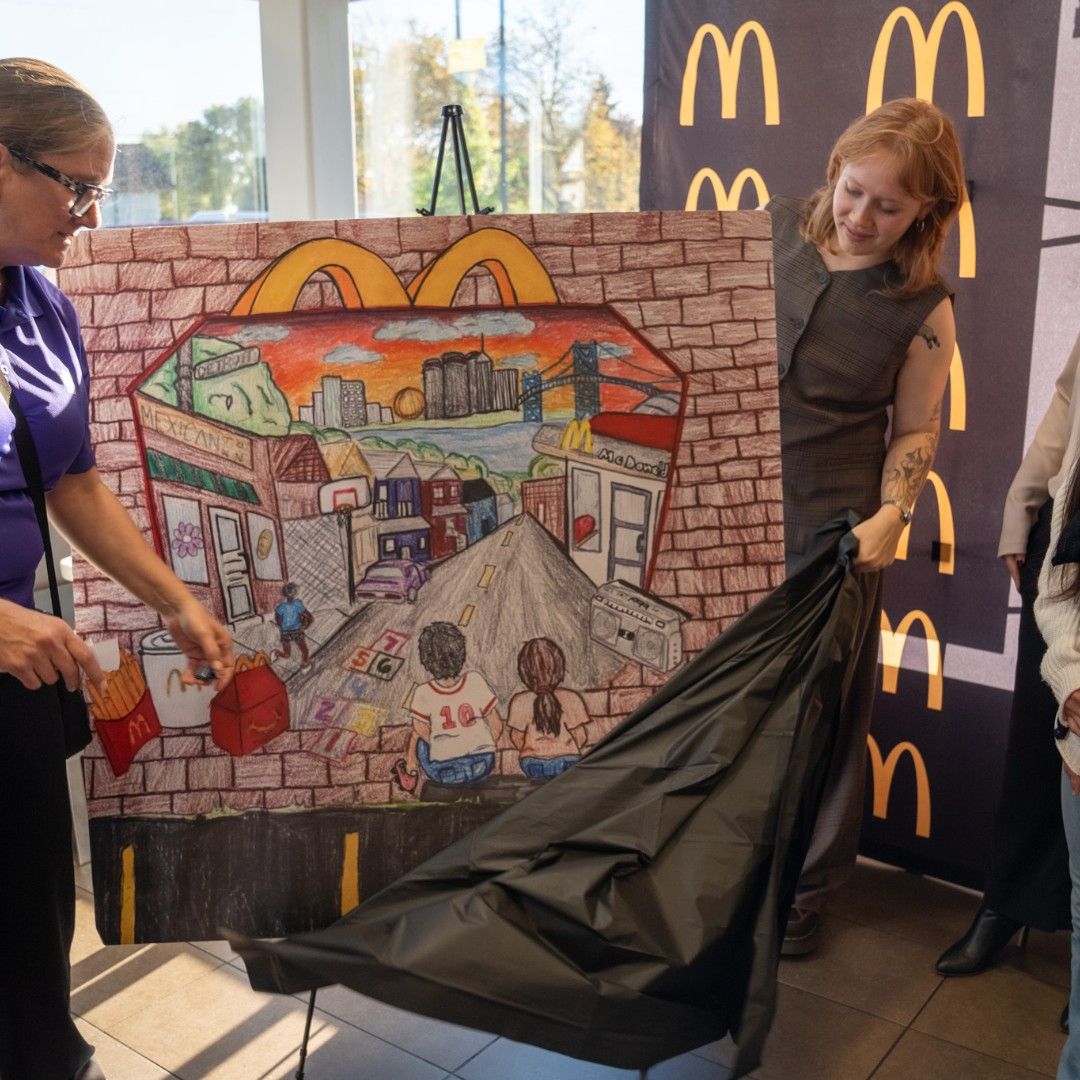
Rosa Valdez painted Southwest Detroit the way she sees it: storefronts, hopscotch squares, the skyline sitting low over the neighborhood. Her artwork is now a mural inside a McDonald’s on West Vernor Highway, and it earned her a $1,000 scholarship.
Valdez, a student at Aztec Eagles Academy, won “A Celebration of Culture & Community,” a McDonald’s-supported art program held for Hispanic Heritage Month. Academy art students were asked to create original work about their connection to Hispanic heritage and to Detroit. A panel of judges chose her design.
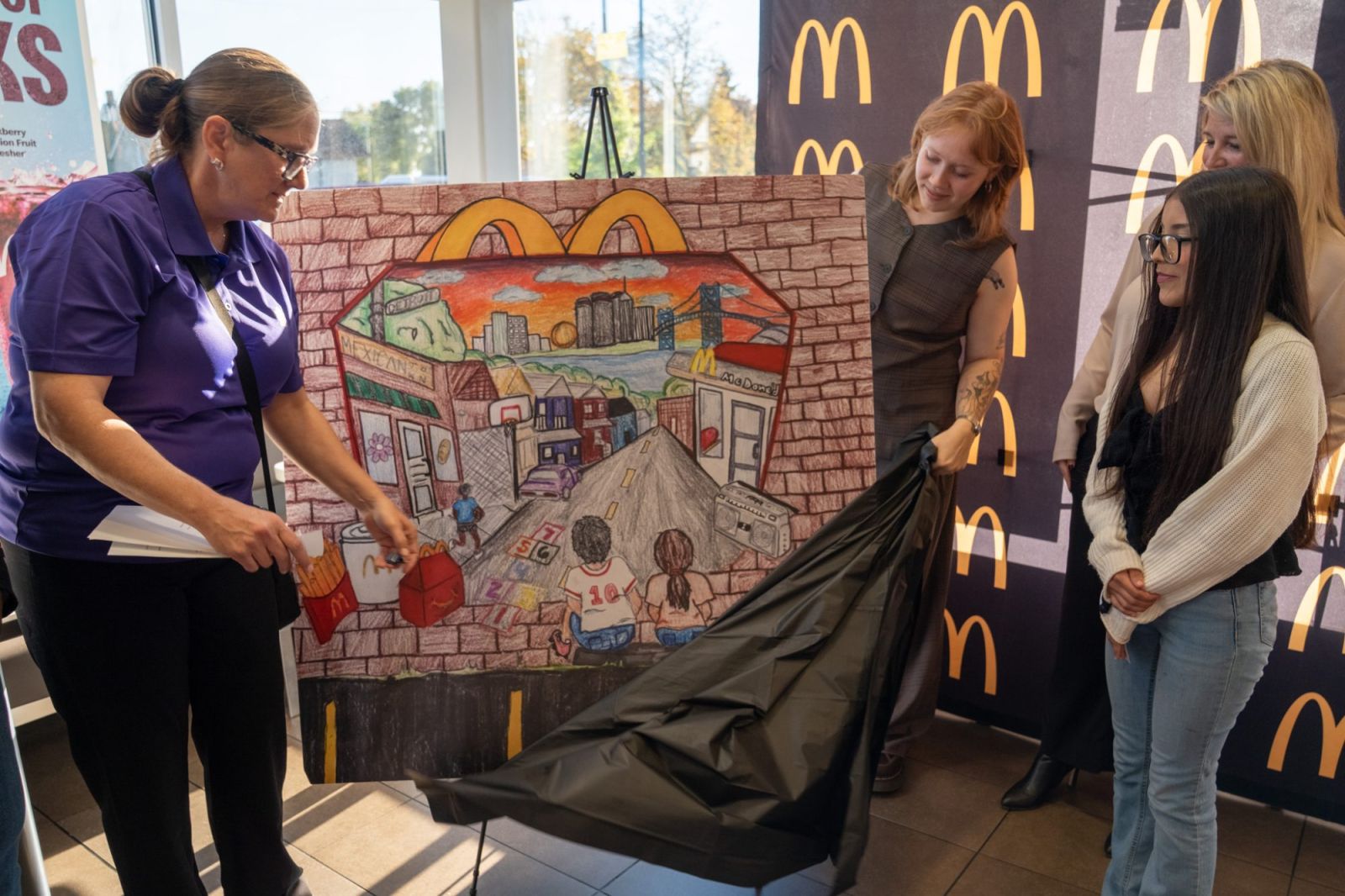
Aztec Eagles Academy student Rosa Valdez with her winning artwork for “A Celebration of Culture & Community.” Courtesy of Golden Arches Mural Program
McDonald’s gave the academy’s art department a separate $500 grant for future creative opportunities. “This mural is a great example of what happens when young people are given an opportunity to share their culture, creativity and perspective with the community,” said Neel Chapatwala, the local owner/operator who supported the program.
Anyone who doesn’t know the neighborhood could miss what’s packed into the picture. Two children sit with their backs to us, looking down a street of houses, a Mexican storefront and a basketball hoop. A boombox rests by the curb, a nod to the years when music traveled through neighborhoods on portable stereos. Above it all, the Detroit skyline meets an orange sky. Nothing in the scene is grand. It’s a block where people shop, play and hang around, and that’s what gives it character.
Detroit’s History on the Walls
Detroit artists have a long habit of putting the city’s people, industries and neighborhoods on walls and in public view.
Diego Rivera came to Detroit in 1932 to paint the Detroit Industry Murals at the Detroit Institute of Arts. He studied workers at Ford’s River Rouge complex and filled notebooks with sketches of machinery, factory operations and the people running them. The 27 fresco panels, finished in 1933, carried the assembly line into a museum: engines, laborers and the technology reshaping everyday life, painted at monumental scale. Rivera tied Mexican mural tradition to the American industrial experience, and almost a century later the murals are still among the city’s most important cultural landmarks.
Tyree Guyton took a different route. In 1986 he started the Heidelberg Project, turning abandoned houses and vacant property on Heidelberg Street into an outdoor installation of painted patterns, discarded objects and the buildings themselves. It was his response to urban abandonment and to what was happening to his own neighborhood. The project drew international attention to an ordinary residential street, and in 2026 the Kresge Foundation named Guyton its Kresge Eminent Artist.
Rivera painted labor. Guyton turned a neglected block into something people traveled to see.
Valdez’s mural is an early encounter with that tradition, set in a restaurant where residents see it on an ordinary day. The scholarship backs her personally, and the grant gives her school’s art department more to work with. Both come at a time when a creative career takes a lot more than technique.
Where Art Meets the Creative Economy
An artist might start with a drawing, a photograph or just the urge to make something original. Doing it for a living brings in questions about education, equipment, intellectual property, financing and who commissions the work.
The United Nations Trade and Development’s Creative Economy Outlook 2024 put creative services exports at $1.4 trillion in 2022, with creative goods exports at $713 billion. The services side covers software, research and development, advertising, architecture and audiovisual production, so the economic definition of creative work now stretches well past the studio. Those numbers describe a huge global market. They don’t say whether a single painter, illustrator or designer can earn a living in it.
Countries have taken very different approaches to that problem.
Mexico’s Jóvenes Creadores program has backed young artists since 1989. In 2026, the Ministry of Culture selected 225 artists between 18 and 34, spread across 25 specialties. Recipients get financial support to produce original work, plus mentors and contact with other artists. The idea is that an artist needs time to experiment and guidance from people further along, not just a finished piece.
Brazil’s Galpão Aplauso, in Rio de Janeiro, pairs performing arts with technical education and job preparation. Theatre and other creative activities build communication and practical skills. The Inter-American Development Bank, which supported the initiative, found in its evaluation that participants were 33% more likely to find employment and earned 27% more than a comparison group. Many of those jobs are outside the arts, in fields like construction and services.
Nigeria is betting on entrepreneurship. The Investment in Digital and Creative Enterprises program, or iDICE, launched in 2023 with backing from the African Development Bank and other financing partners. It aims to train more than 175,000 young people and support hundreds of digital startups and creative businesses. Its employment projections are still goals, not results, but the money is aimed at film, animation, gaming and digital content.
South Africa goes straight at employment. The National Employment Facility for Creative Industries in South Africa, or NEFCISA, is run by the Music In Africa Foundation with the Industrial Development Corporation. It trains participants and places them in part-time creative roles with host organizations. It has placed 1,500 workers, well past its original target of 1,000.
Where Valdez goes from here is open. She might keep studying art, move to another creative field or take the experience somewhere else entirely. The mural holds its meaning either way.
For now, it’s up on West Vernor Highway, where anyone stopping in for lunch can see it.
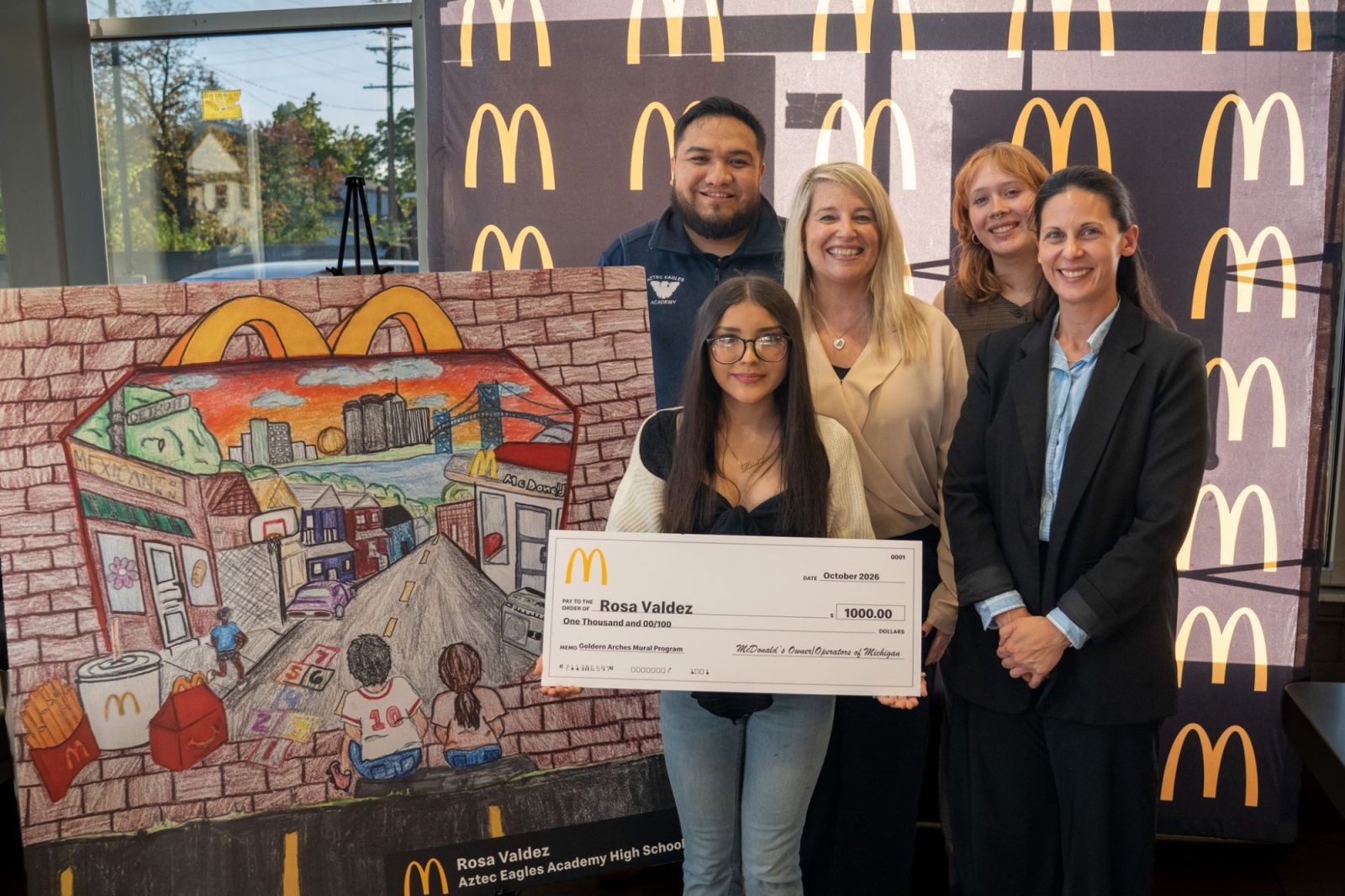
Artwork is unveiled at the McDonald’s on West Vernor Highway October 13. Courtesy of Golden Arches Mural Program